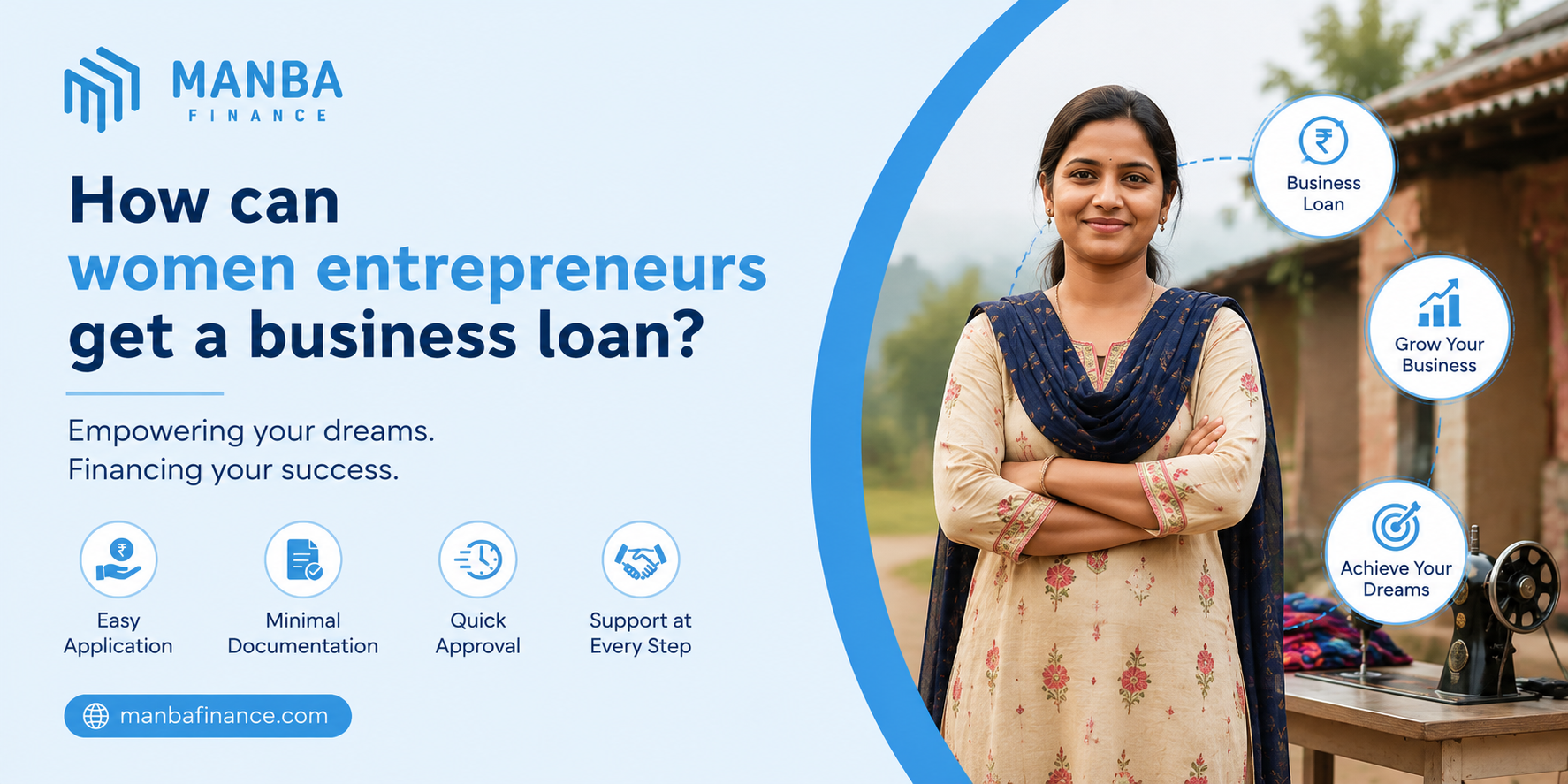
Women entrepreneurs can get a business loan by meeting lender eligibility requirements, maintaining financial records, submitting the required documents, and choosing the right financing option. Many lenders, alongside government-backed initiatives such as Mudra Yojana and Stand-Up India, support women-owned businesses with funding for startups, expansion, inventory, equipment, and working capital.
Introduction
Women now lead roughly a fifth of India’s MSMEs, a number that’s grown steadily as more women move from running informal household ventures to registered, scalable businesses. What hasn’t kept pace, in a lot of cases, is access to the capital that growth actually requires.
The hurdles tend to repeat themselves: limited collateral, a thin or non-existent credit history, and simply not knowing which schemes exist or how to apply for them. None of these are dead ends, though. Between regular bank and NBFC loans and a fairly wide net of government-backed schemes built specifically for women-led businesses, there’s more than one route into funding. The trick is knowing which one fits your situation.
Why Business Loans Are Important for Women Entrepreneurs
Starting a New Business
Initial capital for registration, setup, and the basics of getting a venture off the ground.
Expanding Operations
Funding to enter new markets, add locations, or scale beyond what’s currently manageable.
Purchasing Equipment
Machinery, tools, or technology that a business can’t grow past without.
Managing Working Capital
Covering the day-to-day gap between expenses going out and revenue coming in.
Hiring and Growth
Bringing on staff or building out a team as the business outgrows what one or two people can run.
Why do women entrepreneurs need business loans?
Business loans give women entrepreneurs the capital to start new ventures, expand operations, purchase equipment, manage working capital, and hire staff funding that’s often hard to source from personal savings alone.
Who Can Apply for a Business Loan as a Woman Entrepreneur?
Eligibility generally comes down to a handful of factors: holding majority ownership in the business (most schemes require at least 51% female ownership), falling within the lender’s age bracket, and having a business that’s been operating long enough to show some track record though several schemes are built specifically for first-time founders with no vintage at all. Beyond that, lenders look at income and turnover, your personal and business credit profile, and how your banking history reads regular transactions and a clean account history tend to count in your favour.
Opportunity What are the eligibility criteria for a business loan for women entrepreneurs?
Eligibility typically requires majority business ownership by a woman, an age within the lender’s specified range, a minimum business vintage (waived for some startup-focused schemes), stable income or turnover, and a reasonable credit and banking history.
Documents Required for a Business Loan
Personal documents start with the basics PAN card, Aadhaar card, and address proof. On the business side, you’ll typically need registration documents, GST filings if applicable, recent bank statements, and proof of income. Financial documents round it out: profit and loss statements and ITR filings that give the lender a clear read on how the business is actually performing.
What documents are required for a business loan? A business loan application usually needs PAN and Aadhaar cards, address proof, business registration documents, GST filings (where applicable), bank statements, and financial records such as profit and loss statements or ITR filings.
Step-by-Step Process to Get a Business Loan
Start by working out exactly how much funding you need and what it’s for; vague numbers lead to either under-borrowing or over-borrowing. Check your eligibility against a few lenders before applying anywhere, since criteria vary more than people expect. Get your documents organised in one place rather than scrambling once you’ve already started an application. Compare loan options on interest rate, tenure, and whether collateral is involved. Submit the application with accurate details; this matters more than it sounds. And then comes verification and approval, where the lender confirms what you’ve submitted before disbursing funds.
Factors That Improve Business Loan Approval Chances
A healthy credit score helps more than almost anything else on this list. Keeping financial records current and easy to produce signals you run a tight operation. Stable, demonstrable revenue, even modest revenue, shown consistently reassures a lender more than a single strong month ever will. Reducing existing debt before applying lowers your perceived risk. And a good standing with your existing bank, built over time through regular transactions, often counts for more than people realise.
How can women entrepreneurs improve business loan approval chances? Approval chances improve with a strong credit score, up-to-date financial records, consistent business revenue, manageable existing debt, and a solid banking relationship built through regular account activity.
Common Reasons Business Loan Applications Get Rejected
Poor credit history tops the list, followed closely by incomplete documentation missing one form is often enough to stall an otherwise solid application. Unstable or unpredictable business income raises flags, as does carrying too much existing debt relative to income. And inaccurate details on the application itself, even unintentional ones, can trigger a rejection that has nothing to do with the business’s actual viability.
Can First-Time Women Entrepreneurs Get a Business Loan?
Direct Answer: Yes. Several schemes Mudra Yojana’s Shishu and Kishor categories among them are built specifically for first-time founders with little to no credit history, and collateral isn’t required at these entry levels. A clear business plan matters more here than financial track record, since it’s largely what lenders use to judge viability in the absence of one. Where a formal loan isn’t yet a fit, alternatives like microfinance institutions or scheme-specific subsidies can bridge the gap. Each lender and each scheme sets its own criteria, so it’s worth comparing more than one before assuming you don’t qualify.
Can a woman get a business loan for a startup? Yes. Women entrepreneurs starting a new business can access startup-focused financing through schemes like Mudra Yojana and Stand-Up India, as well as regular lenders, often without needing an established credit history.
How to Choose the Right Business Loan
Match the loan to its actual purpose first, working capital and equipment financing aren’t interchangeable, and choosing wrong adds cost. Be honest about repayment capability before the amount, not after. Borrow only what the business genuinely needs, not the maximum you happen to qualify for. Factor in how much documentation a given lender or scheme demands, since that affects how quickly you can actually access funds. And weigh the approval timeline against how urgently the money is needed.
Tips for Women-Led Small Businesses Seeking Financing
- Keeping business accounts separate from personal ones from day one makes everything from tax filing to loan applications considerably less painful later. Track cash flow regularly rather than only when something feels off. Build business creditworthiness deliberately, the same way you’d build a personal credit score. Have a real growth plan on paper, not just in your head. And borrow according to what the business needs right now, not what feels available.
Frequently Asked Questions
Can a housewife apply for a business loan?
– Yes, provided she meets the lender’s eligibility criteria many schemes are specifically designed to support women starting a business for the first time, regardless of prior work history.
Can women get a business loan without collateral?
– Yes. Mudra Yojana’s Shishu and Kishor categories, along with several other government-backed schemes, offer collateral-free loans up to a defined limit for women entrepreneurs.
What is the minimum credit score required for a business loan?
– This varies by lender, but a higher score generally improves both approval odds and the interest rate offered. Borrowers with limited or no credit history can still qualify through schemes designed for first-time founders.
Can a startup run by a woman get financing?
– Yes, startup-stage businesses can access funding through schemes like Mudra Yojana and Stand-Up India, as well as lenders that evaluate applications based on business plans rather than financial history alone.
How long does business loan approval take?
– Timelines vary by lender and loan type, ranging from a few days for smaller, document-light loans to a few weeks for larger amounts that require more thorough verification.
Conclusion
Getting a business loan as a woman entrepreneur really comes down to a few repeatable steps: know what you’re borrowing for, get your documents in order, understand which schemes and lenders actually fit your situation, and apply with accurate information. None of it is complicated, but skipping a step is usually what slows things down.
Used well, financing isn’t just a stopgap it’s one of the more reliable tools for turning a small, steady business into one that’s actually scaling. Borrow what the business needs, repay on schedule, and let that track record open up better options the next time around.
Looking to grow your business? Explore business financing solutions from Manba Finance and take the next step toward achieving your entrepreneurial goals.